
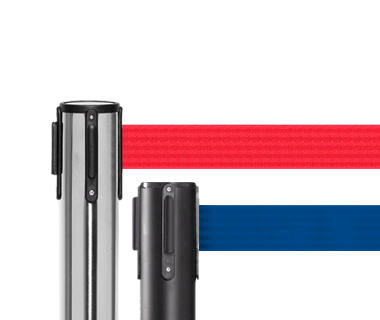
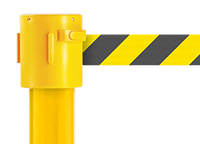

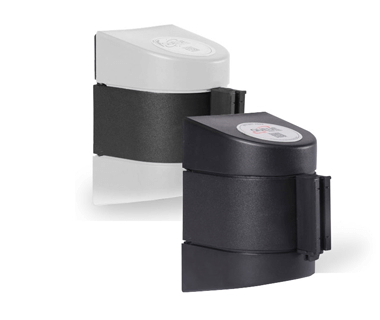

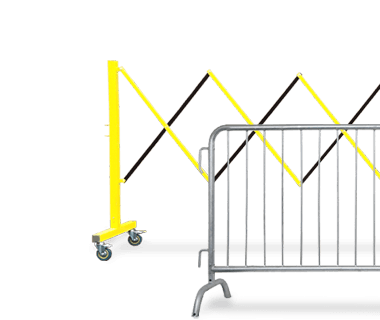

Quick answer: Durable stanchions have steel posts, solid cast iron bases, a belt brake, and long belts. Cheap stanchion sets cost less up front, and for a few events a year they can be enough. For a line that is used every day, commercial-grade stanchions usually cost less over time: steel posts and cast iron bases hold up to bumps and carts, longer belts mean fewer posts to break, and a proper belt brake keeps the cassette working. The right choice depends on how often the line is used and how hard.
Fall Sale: 10% off 6, 8, and 10-post stanchion bundles through November 30.
Where Cheap Stanchions Usually Fail
Most low-cost stanchions do not fail all at once. They wear out in the same few places, usually within the first busy season:
- The belt brake. Without a good brake, a released belt snaps back into the post at speed. That wears out the cassette and can hit someone at eye level.
- The spring. A weak spring stops pulling the belt all the way back, so belts hang loose and get stepped on.
- The belt itself. Thin webbing frays at the edges, and a frayed belt usually means replacing the whole cassette.
- The base. Hollow bases filled with sand or concrete are light for their size and tip more easily when a cart or bag catches the belt.
- The post. Thin tubing dents, and a dented post is the first thing customers notice.
What Makes Durable Stanchions Last
| Part | Built to Last | Why It Matters |
|---|---|---|
| Base | Solid cast iron | Heavy, low center of gravity, resists tipping and chipping |
| Post | Heavy-duty steel | Takes bumps from carts, strollers, and luggage without denting |
| Belt cassette | Belt brake for slow retraction | Protects the mechanism and the people around it |
| Belt length | 11, 13, or 16 feet | Fewer posts for the same line means fewer parts to wear out |
| Floor contact | Full-circumference rubber protector | Protects floors and keeps the base from sliding |
| Compatibility | Works with major brands | Replace a part or add posts without replacing the whole set |
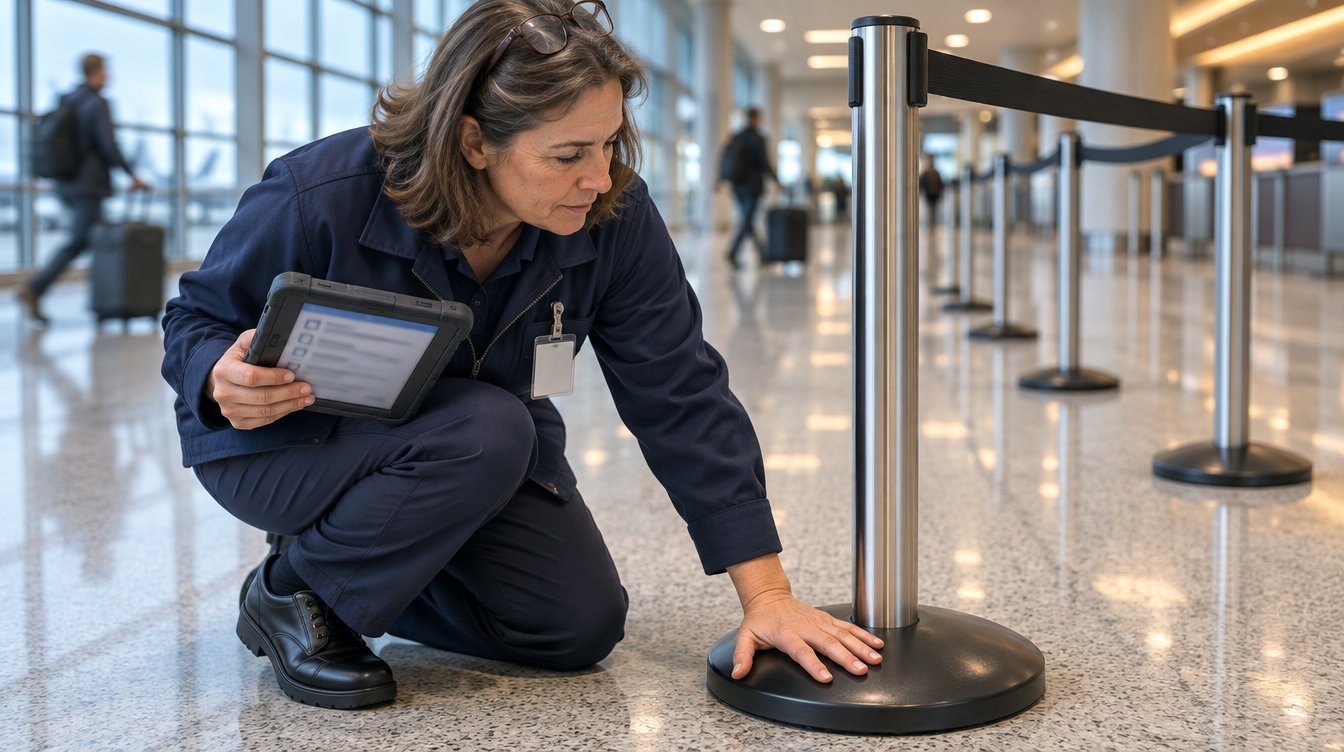
Our QueuePro stanchions are built this way: heavy-duty steel construction on solid cast iron bases, a 2.5-inch post, a full-circumference floor protector, and compatibility with all major brands. They are made for high-traffic places like airports, retail stores, stadiums, and arenas.
Fewer Posts, Fewer Problems
Belt length is a durability question too. Many low-cost sets come with 6.6-foot belts. Commercial stanchions such as the QueuePro 250 use 11 or 13-foot belts, and the QueuePro 300 uses 16 feet.
| Belt Length | Working Spacing | Posts for a 60 ft Line |
|---|---|---|
| 6.6 ft | About 5.5 ft | 12 posts |
| 11 ft | About 10 ft | 7 posts |
| 16 ft | About 15 ft | 5 posts |
Twelve posts means twelve springs, twelve brakes, and twelve bases to set up, store, and replace. Five posts covering the same line means less to break and less to carry. For more on spacing, see how far apart stanchions should be placed.
When a Cheap Set Is Fine
Not every line needs commercial-grade equipment. A lower-cost set is a reasonable choice when:
- The line is used a few times a year, not every day
- Traffic is light and orderly, with no carts or luggage
- The stanchions are indoors and stored carefully between uses
For that kind of use, our economy QueueMaster stanchions are a step up from the cheapest sets without the premium price: heavy-duty ABS posts that resist scratches and dents, a belt brake for slow and safe retraction, a full floor protector, and 8.5, 11, or 13-foot belts.
When Commercial-Grade Pays for Itself
- Daily use. Banks, pharmacies, airports, and checkout lanes set up and break down lines every day.
- Heavy contact. Shopping carts, strollers, luggage, and crowds that lean on the belt.
- Frequent moves. Lines that change through the day are easier with a rolling base like the RollerPro 250, which tilts and pushes on a cast iron base.
- Public accommodation. Twin and triple belt models such as the QueuePro Twin 250 are ADA compliant.
- Appearance. In a lobby or front-of-house space, a dented or faded post reflects on the business.
How to Compare the Real Cost
Price per post is only the starting point. A fair comparison looks at three numbers:
- Cost per foot of line: divide the price of one stanchion by its belt length.
- Number of posts: longer belts need fewer posts for the same line.
- Years in service: divide the total cost by how long the set lasts in your space.
A set that costs less today but has to be replaced after a season or two can end up costing more than a set that lasts for years. To size your line, see How Many Stanchions Do I Need? and our belt vs. rope comparison.
Fall Sale Ends November 30
Retractable belt stanchion bundles with 11-foot belts are 10% off on 6, 8, and 10-post sets, with a sign holder included and flat-rate shipping. Shop the Fall Sale →
Frequently Asked Questions
Are cheap stanchions worth it?
For occasional, light use indoors, often yes. For daily use, carts, luggage, or crowds, low-cost sets tend to wear out at the brake, spring, belt, and base, and replacing them can cost more than buying commercial-grade once.
What is the most durable type of stanchion base?
Solid cast iron. It is heavy for its size, keeps the center of gravity low, and does not crack or chip the way hollow plastic bases filled with sand or concrete can.
Why does belt length affect durability?
Longer belts let you space posts farther apart, so the same line needs fewer stanchions. Fewer posts means fewer springs, brakes, and bases that can wear out.
Can I add to the stanchions I already have?
Yes. QueuePro and RollerPro stanchions are compatible with all major brands, so they can extend or replace parts of an existing set.
Do you offer volume pricing?
Yes. Bulk discounts are available on large orders. Call (800) 480-4523 or contact us for a quote.
More Planning Guides
Stanchions.com has supplied crowd control and queue management products to retailers, banks, venues, schools, and government offices for over 20 years. See real stanchion installations or browse all stanchions →