

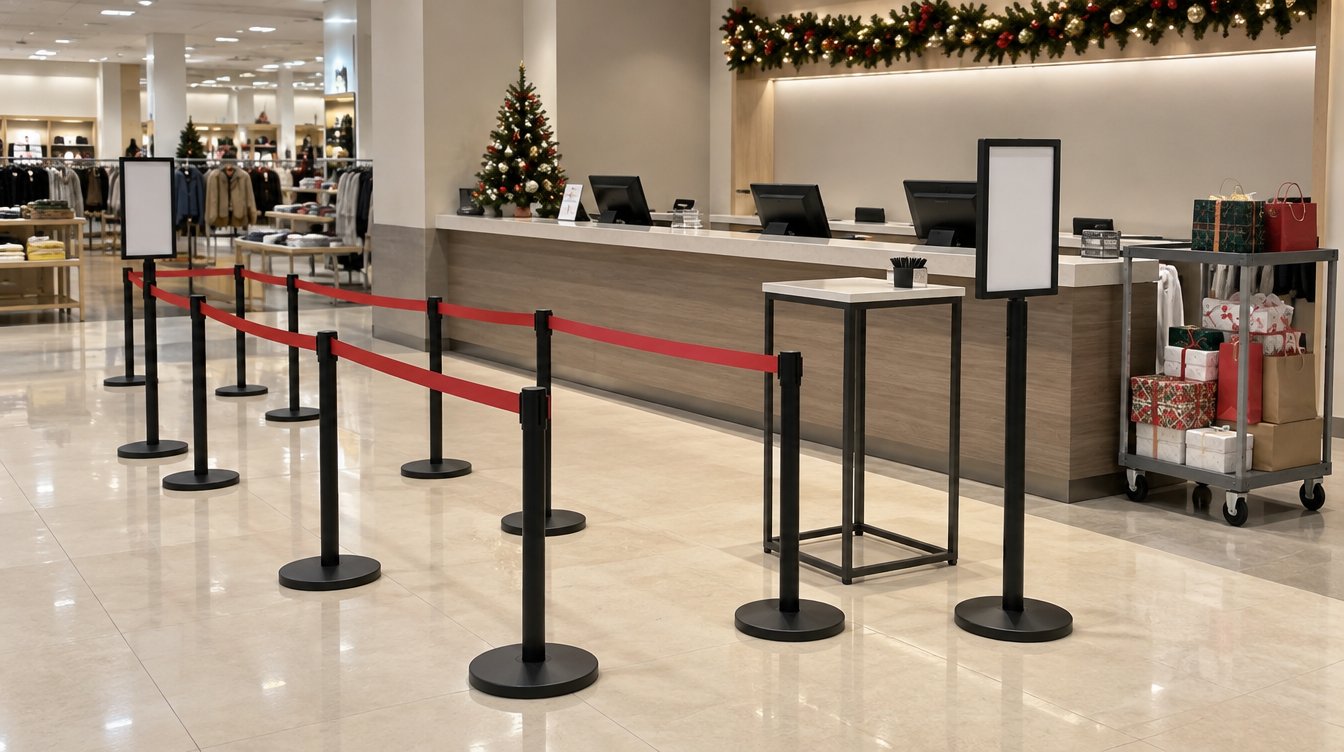
Quick answer: Returns surge in the days after Christmas and stay high through January, when extended holiday return windows close. Set up a dedicated returns line, separate from checkout, before December 26. Place it near customer service and away from the entrance, mark it clearly, and add a triage point at the head of the line where staff check receipts before customers reach the counter.
Fall Sale: 10% off 6, 8, and 10-post stanchion bundles through November 30.
Why the Returns Rush Needs Its Own Line
Adobe Analytics has projected returns rising 25% to 35% in the days after Christmas compared with earlier in December. And because many large retailers now extend return deadlines for holiday purchases into late January, the rush does not end after a weekend — it can run for weeks.
Returns and purchases should not share a line. A purchase takes a minute; a return with a missing receipt, an opened box, or an exchange can take five. When both wait in the same line, checkout slows down for everyone, including customers who came in ready to spend gift cards.
Where to Put the Returns Line
- Near customer service, not at the front registers
- Away from the entrance, so the line does not form a wall customers have to walk through to get into the store
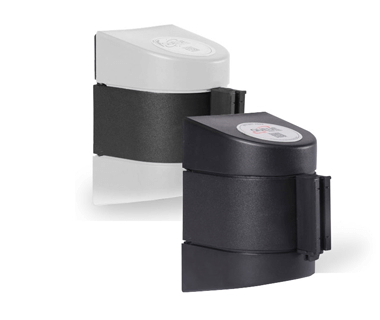
- Along a wall, with wall-mounted belt barriers where the line starts
- Clear of aisles and exits, since returning customers carry bags and boxes
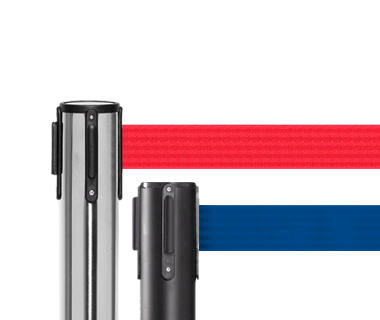
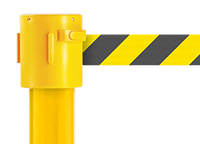
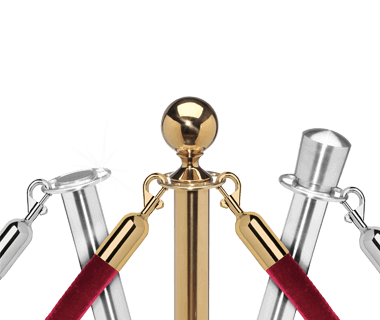
Allow about 3 feet per person in line. Most returning customers are holding something, and a line of 20 runs about 60 feet. A two-lane serpentine of retractable belt stanchions fits that into roughly half the floor space.
Add a Triage Point at the Head of the Line
The fastest way to shorten a returns line is to sort it before customers reach the counter. Station one employee at the head of the line to ask two questions: Do you have a receipt or order number? Is this a return or an exchange? Customers who need extra steps go to a second counter; simple returns go straight through. A small table at the head of the line is all this takes.
Signs Prevent the Longest Delays
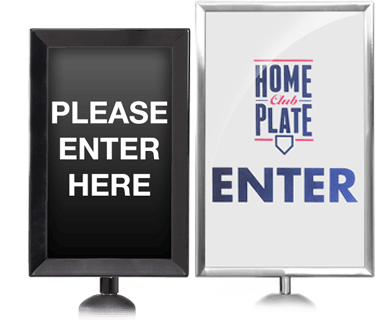
Most slow returns come from customers who reach the counter unprepared. Put the instructions on the line with stanchion signs so they are ready by the time it is their turn:
- “Returns & Exchanges — Line Starts Here”
- “Have your receipt, order number, or gift receipt ready”
- “Please have your ID available”
- “Purchases? Please use the front registers”
Post-top sign frames keep each message at eye level along the line.
Reconfigure as the Day Changes
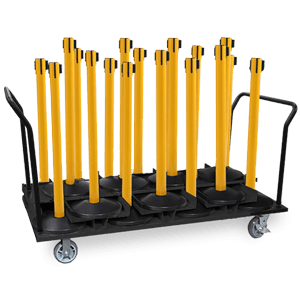
Returns traffic is heaviest in the morning after a holiday and drops later in the day, while checkout traffic often rises as customers spend gift cards. A rolling base like the RollerPro Twin 250 lets one employee tilt and move each post in seconds, so the same stanchions can shift from returns to checkout by afternoon. When the season is over, stanchion storage carts keep the whole set together for next year.
A Returns Line Is Also a Sales Line
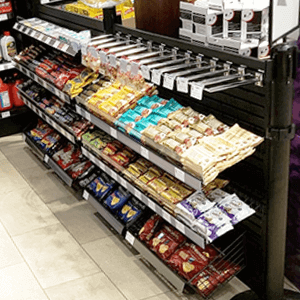
A customer returning one item is often about to buy another. In-queue merchandising displays along the returns line — gift cards, accessories, batteries, small add-ons — turn the wait into a second chance at the sale.
And if the line stays long even with a triage point, an electronic call system helps. Our sister brand Qbuster Technologies sends the next customer to the next open counter with numbered displays. Stanchions organize the line; Qbuster moves it faster.
Fall Sale: Ready Before December 26
- 10% off 6, 8, and 10-post bundles through November 30 at 11:59 PM ET
- 11-foot retractable belts — about a 30-foot line with just four posts
- A sign holder included with every 6, 8, and 10-post bundle (two with the 10-post bundle)
- Black or red belts, flat-rate shipping on bundles
Shop the Fall Sale → or call (800) 480-4523 for help planning your returns area.
Frequently Asked Questions
When is the busiest day for holiday returns?
The days right after Christmas, starting December 26. With extended holiday return windows, returns stay elevated well into January.
Should returns and checkout share a line?
No. Returns take longer than purchases, so a shared line slows down every customer who came in to buy. A separate, clearly marked returns line keeps both moving.
How long should a returns line be?
Plan about 3 feet per person. Twenty customers need roughly 60 feet, which fits into a two-lane serpentine. See How Many Stanchions Do I Need? for the full calculation.
More Planning Guides
- How to Set Up a Black Friday Line
- How to Manage Holiday Lines at a Shipping Store or Post Office
- How Far Apart Should Stanchions Be Placed?
Stanchions.com has supplied crowd control and queue management products to retailers for over 20 years. See real stanchion installations or browse all stanchions →